
By comparing the advantages and disadvantages of the current maintenance and detection system methods, the significance of pioneering and applying transformer-type power equipment status monitoring and fault diagnosis technology is analyzed, the current transformer detection and fault diagnosis technology is studied, and the current problems and development prospects of the technology are introduced.
Introduction
With the gradual increase of power load and the increasing requirements for power system stability, the status monitoring and fault diagnosis technology of transformer-type electrical equipment has received increasing attention. More and more research and production departments are actively developing and applying this technology, and it has been fully promoted. In this case, a comprehensive, objective and in-depth understanding of this technology, understanding its current technical status, comparing and recognizing its advantages and disadvantages and relationship with the current preventive maintenance system will be of certain significance for the correct development, application and promotion of this new technology and better guarantee of the reliable safety of power production.
1. The importance of status monitoring and fault diagnosis technology
The transformer is an important power equipment connecting the generation, transmission and distribution links. With the development of the economy, the increase of power load and voltage level, the reliability of transformer operation has a more obvious impact on the stability of the power system. When the transformer is in operation, it is affected by various factors such as electricity, heat, machinery, and environment, and its performance will gradually deteriorate, the operating state will deteriorate, and various types of faults may occur.
In order to minimize and avoid the occurrence of faults, the traditional practice of the power system has long been to continuously study, summarize, and implement various effective regular preventive tests and maintenance methods. Compared with accident maintenance, this preventive test and maintenance method has made essential progress. However, there is blindness in regular planned maintenance, and most preventive tests are carried out offline, which requires shutdown and power outage during the test, causing economic losses. For some important equipment, it cannot be easily shut down, making regular tests difficult to complete. Even if the equipment to be inspected can be shut down, the test results will often be biased due to the difference in the transformer status during operation and after shutdown. On the other hand, inspection and maintenance may cause excessive maintenance and damage the performance of the transformer.
2. Transformer status monitoring and fault diagnosis
Transformer fault diagnosis technology has changed from a time-based approach to a status-based approach, and its content includes two aspects: status monitoring and fault diagnosis. The former provides a maintenance basis for status maintenance by extracting fault characteristic signals, while the latter analyzes and processes the collected status information. Research on transformer online monitoring technology generally includes the following contents: (1) fault mechanism analysis; (2) online monitoring means; (3) transmission, processing and storage of monitoring information; (4) extraction of fault characteristic quantities; (5) fault diagnosis methods and theoretical analysis.
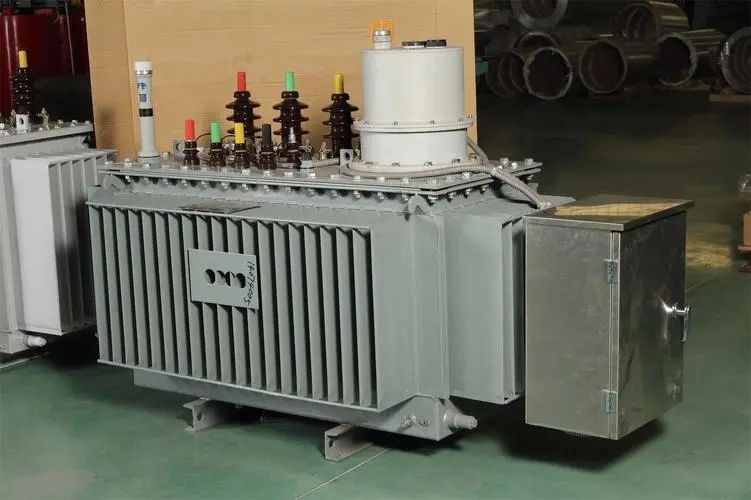
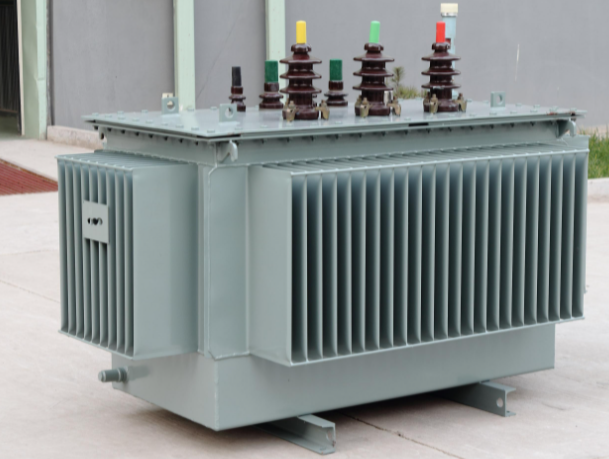
The power industry mainly uses oil-filled transformers, and dry-type transformers or sulfur hexafluoride transformers are also used in some special occasions. At present, local discharge monitoring and ultrasonic positioning technology, infrared technology, and micro-water analysis technology are mostly used for transformer status monitoring at home and abroad. For the high-voltage bushing of the transformer, the digital online measurement technology of the dielectric loss factor is usually used. For on-load tap changers with more faults, on-load fault diagnosis online devices are used to measure contact wear and mechanical and electrical circuits. In addition, parameters such as oil temperature, winding temperature, load current and voltage, and cooling pump fan operation are also monitored for transformer status monitoring. The main components of the transformer involved are: insulation of magnetic circuit windings and fixed insulating liquid, gas insulation and cooling system. The faults to be diagnosed are: overheating fault, discharge fault, overheating and discharge fault, mechanical fault and water ingress, etc. Commonly used partial discharge monitoring and diagnosis mostly use electric pulse signal generation method and ultrasonic method to achieve ideal quantitative and positioning effects of combined detection of electric signals and acoustic signals, and judge the fault according to the apparent discharge amount, distribution spectrum and location of the discharge source. Analysis of dissolved gas content in oil (DGA) first uses various degassing principles based on the principle of solubility equilibrium, such as vacuum, permeable membrane, gas elution, etc. to remove the gas in the oil, and then separates it with a separation column, and then monitors it with a detector (such as TCD, FID, etc.), or monitors different components of gas with sensors of various principles. Then, based on the commonly used component ratio method or multi-dimensional graph method at home and abroad, combined with electrical tests and offline regular test results, comprehensive analysis and diagnosis of latent faults. Recently, composite permeable membrane electrochemical/fuel cell infrared monitoring and other technologies have been developed to analyze the content of dissolved gas components in oil. Since the accuracy of DGA analysis and judgment has been recognized at home and abroad, this technology has become a hot spot for research in various countries.

 China
China English
 Malay
Malay